


 info@tenderkeeps.com
Table of Contents
- What Makes a Gift Look Cheap
- How to Spot High Quality Custom Jewelry
- Best Personalized Gifts Under $50
- Choosing Materials That Feel Premium
- Design Principles for Personalization Without Tackiness
- Common Mistakes to Avoid When Ordering
- Presentation and Packaging Elevate Perceived Value
- Conclusion
Last Updated: August 17, 2026
What Makes a Gift Look Cheap
A personalized gift can feel thoughtful or tacky depending on execution. When you understand what signals "mass-produced" versus "intentional," you gain the power to avoid cheap looking personalized gifts entirely.
The psychology of perceived value starts with materials. A thin metal feels light in your hand. A poorly chosen font looks generic. Packaging that arrives crumpled sends a message before the recipient even opens the box. Each detail compounds to determine whether someone thinks "this person really knows me" or "they grabbed something off a shelf."
Mass-Produced Aesthetics vs. Thoughtful Design
Mass-produced personalized gifts rely on obvious personalization: huge initials splashed across the front, generic fonts, minimal thought about placement or scale. The aesthetic screams "I added your name to a template."
Thoughtful design integrates personalization seamlessly, so the custom element feels like part of the original design, not an afterthought. A monogram sits balanced in a corner. Initials are subtle enough that someone notices them only after looking twice. The typography matches the overall aesthetic rather than fighting against it.
The key difference is intentionality. A mass-produced approach personalizes first and designs second. A quality approach designs first, then personalizes in a way that enhances rather than dominates. At Tender Keeps, personalization should feel like it was always meant to be there, not like it was added as an obligation.
The Psychology of Budget Materials
Cheap materials trigger an immediate psychological response. Your brain registers weight, texture, and finish in milliseconds. A piece of jewelry that feels flimsy creates cognitive dissonance: "This person spent money on me, but the object feels like it cost nothing." That contradiction undermines the sentiment, no matter how genuine the gesture.
Budget materials don't just feel cheap, they perform cheaply. Thin plating wears through within months. Low-grade metals tarnish or discolor. A gift that deteriorates sends an unintended message: "This wasn't meant to last." Quality materials signal that you cared enough to choose something that would endure.
How to Spot High Quality Custom Jewelry
Quality custom jewelry has identifiable markers. Learning to recognize them before you buy transforms your ability to avoid cheap looking personalized gifts entirely.
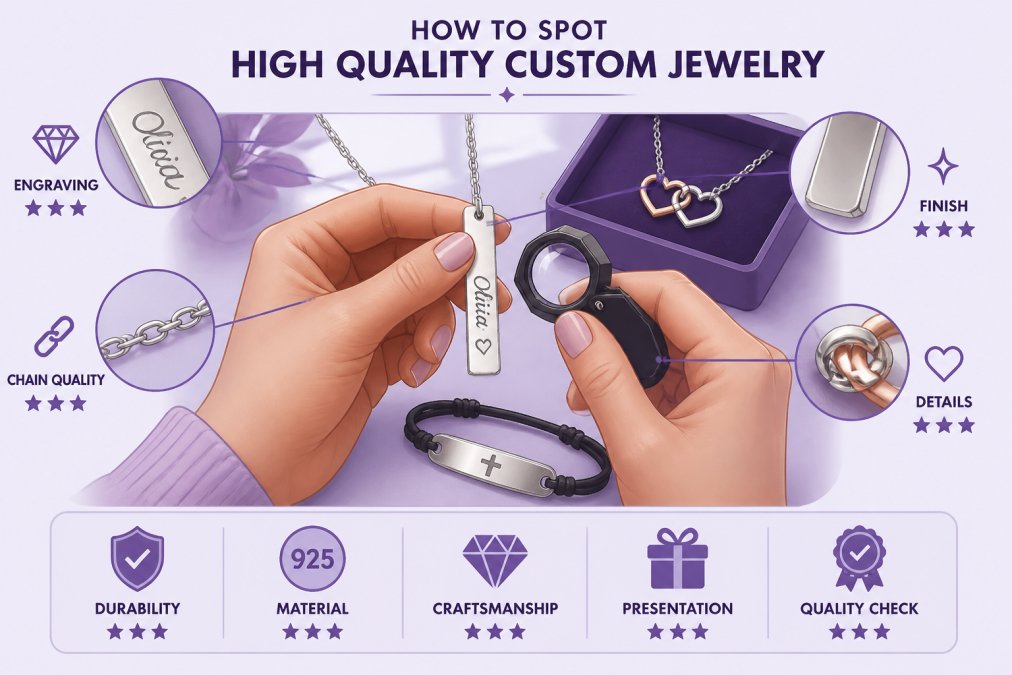
Material Weight and Durability
Hold the piece in your hand. Quality jewelry has substantial weight, not heavy, but dense. A bracelet that feels substantial, a pendant that has presence, a ring that doesn't feel like it might bend if you grip it too hard.
Sterling silver should weigh noticeably more than costume jewelry. Gold-plated pieces over solid brass feel different than thin plating over cheap metal. Research the vendor's material specifications. Real vendors provide details: "sterling silver," "14k gold," "genuine leather," not vague terms like "quality metal" or "premium material."
Check for finish consistency. Does the plating look uniform, or are there thin spots? Are engravings clean and precise, or do they look rushed? These visible markers correlate directly with how long the piece will last.
Finishing Techniques: Engraving vs. Printing
Engraving involves removing material, cutting or etching into the surface. This creates permanence. The personalization can't wear off because it's part of the object itself. Laser engraving offers precision; hand engraving offers character. Both feel intentional and lasting.
Printing applies color or pattern to the surface. It's faster and cheaper, which is why mass-produced items use it. The problem: printing deteriorates. It fades, chips, and peels. After six months of normal use, printed personalization often looks worn and cheap.
For jewelry, engraving almost always wins. For home goods or leather, both work, but printing should be high-quality. Look for vendors who use UV-resistant inks or specialized printing techniques, not basic screen printing that will fade in sunlight.
Best Personalized Gifts Under $50
You don't need a large budget to avoid cheap looking personalized gifts. Strategic choices matter more than price.
Tender Keeps offers options in this range that prioritize quality over volume.
Where Budget Doesn't Mean Low Quality
The difference between a $20 personalized gift and a $50 one isn't always visible. Often, it's about material grade, finishing technique, and packaging.
A simple personalized item in high-quality material outperforms a complex item in cheap material. A single monogrammed leather bookmark in genuine leather feels more valuable than a multi-item set in synthetic materials. Restraint and quality beat elaboration and cost-cutting.
Free shipping on orders over $70 means you can combine smaller items into a more substantial gift package without exceeding budget. Focus on utility combined with personalization. A personalized item someone will actually use becomes part of their daily life, reinforcing the sentiment behind the gift.
Choosing Materials That Feel Premium
Material selection is the foundation of perceived value. This choice happens before design, before personalization, before packaging.
Metal Grades and Plating Standards
If you're buying personalized jewelry, metal grade matters enormously. Sterling silver (92.5% pure silver) is the minimum standard for jewelry that will last. Anything less, "silver-plated," "silver-tone," "silver-colored", is costume jewelry that tarnishes and deteriorates.
Gold comes in karats: 10k, 14k, 18k, 24k. Higher karat means more pure gold and better durability. 14k gold is the industry standard for jewelry meant to last. Plating thickness matters. Quality plating is at least 2.5 microns thick. Anything thinner will wear through quickly.
Stainless steel (316L or higher) is underrated. It resists tarnishing, holds engravings beautifully, and feels durable while often costing less than silver or gold.
Natural vs. Synthetic Materials
Natural materials age beautifully. Leather develops patina. Wood gains character. Genuine stones hold their appearance. These materials signal that the maker chose something meant to evolve and endure, not something designed to look new and then degrade.
If budget is a constraint, choose natural materials at a lower price point rather than synthetic materials at a higher one. A personalized wooden item feels more premium than a personalized plastic item at the same price. Leather outperforms faux leather in perceived value.
Natural materials inherently communicate quality and intentionality.
Design Principles for Personalization Without Tackiness
The line between sentimental and tacky comes down to restraint, typography, and proportion.
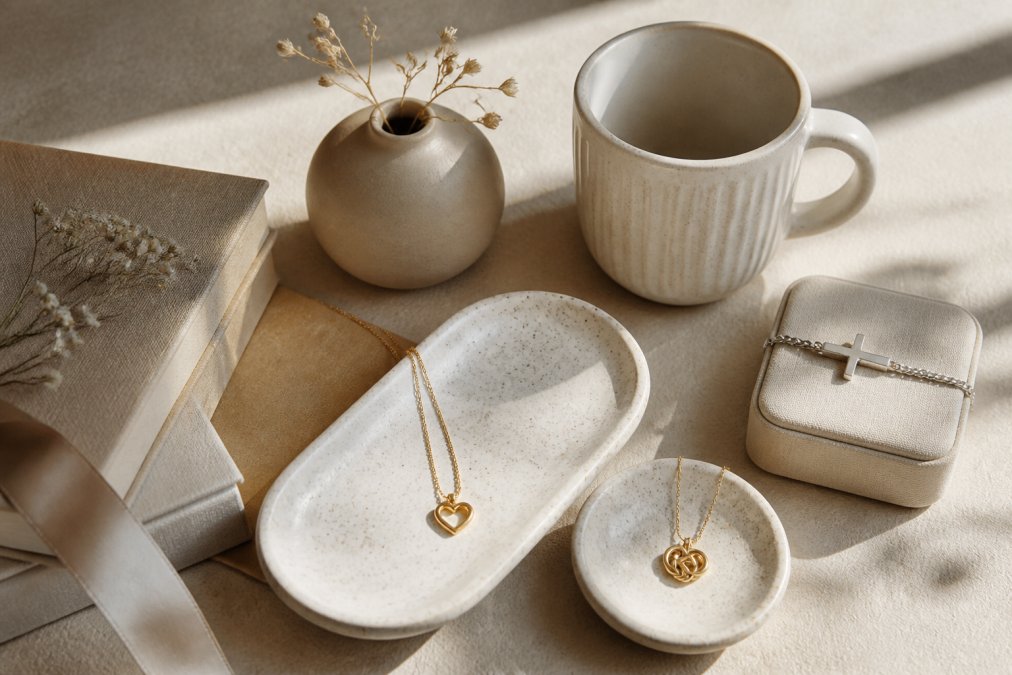
Minimalist Personalization: Less Is More
The most common mistake is over-personalizing. Adding too much text, making initials too large, or covering the entire surface with custom elements overwhelms the object and makes it feel cheap.
Quality personalization is restrained. A monogram in one corner. Initials on the back. A single date on the inside. The personalization should enhance the object, not dominate it. A personalized mug with a small, centered design feels intentional. The same mug covered in text and images feels cluttered.
Restraint signals confidence and taste. Excess signals insecurity or lack of design sense. When you personalize minimally, you're saying "this design is strong enough that it doesn't need decoration."
Typography Matters: Font Selection and Placement
Font choice is invisible to most people but felt by everyone. A poor font undermines an otherwise quality gift. A thoughtful font elevates it.
Avoid overly decorative or novelty fonts. Script fonts can work, but they must be legible and refined, not bubbly or childish. Sans-serif fonts (clean, modern) work for almost everything. Serif fonts (traditional, formal) work for sophisticated items.
Placement determines impact. Centered text feels formal. Off-center placement feels designed. Small text feels intentional. Large text feels desperate to be noticed. The font size should be proportional to the object.
Vendors who offer font options are giving you control over this critical detail. When you're ordering personalized gifts, always preview the exact font and placement before confirming.
Common Mistakes to Avoid When Ordering
The order process is where good intentions derail. Small oversights compound into regret.
Spelling, Initials, and Personalization Details
Verify every detail three times. Initials in the wrong order, misspelled names, incorrect dates, these errors are permanent and transform a thoughtful gift into an embarrassing mistake.
Check initials against the order form. Is it first-middle-last or first-last? Confirm with the vendor's standard or specify your preference explicitly. Spelling seems obvious, but autocorrect and fatigue cause errors. If the recipient's name is unusual or has variant spellings, triple-check.
Many vendors offer proofs or preview images. Request one. Seeing the actual personalization before production catches errors that text descriptions miss.
Vendor Quality and Review Research
Not all personalized gift vendors maintain quality standards. Some cut corners on materials, rush production, or deliver items that don't match photos.
Research the vendor before ordering. Read reviews from multiple sources, not just their website. Look for comments about material quality, accuracy of personalization, and shipping condition. Check how long the vendor has been operating and whether they offer guarantees or replacements for defective items.
For high-stakes gifts, consider ordering early enough to request replacements if something goes wrong. Tender Keeps includes package protection options for $2.98, protecting against loss, theft, and damage. This small investment protects against shipping mishaps and provides peace of mind for meaningful gifts.

Presentation and Packaging Elevate Perceived Value
The unboxing experience shapes how the recipient perceives the gift. Premium packaging signals that the item inside is premium.
Quality packaging includes substantial protective materials, not thin tissue paper, but proper cushioning. The box itself should feel sturdy. Opening it should feel intentional, not like tearing through cheap cardboard.
Presentation details matter. A handwritten note adds warmth. Branded packaging signals that the maker cares about the full experience. Tender Keeps offers gift wrap with personalized messages for $7.95. This small addition transforms the presentation. A personalized note from the giver, delivered alongside the personalized item, creates a complete experience rather than just a product arriving.

The recipient's first impression happens in the first five seconds of unboxing. If packaging is cheap, that impression colors everything that follows. If packaging is thoughtful, it primes them to appreciate the gift inside.
Personalized gifts succeed or fail based on choices you make before ordering. Material quality, design restraint, typography, and packaging all compound to create an impression of intentionality or thoughtlessness. When you prioritize quality materials, minimize personalization, choose thoughtful fonts, and invest in presentation, you eliminate the risk of a gift feeling cheap. Start with high-quality materials, keep the design minimal, and invest in presentation. The result is a gift that feels as meaningful as the sentiment behind it.
Frequently Asked Questions
How can you tell if a personalized gift is high quality?
High-quality personalized gifts feel substantial and well-made. Check the weight of metal jewelry, examine engraving or embossing for crisp, even detail, and verify the material composition. Laser-etched or engraved finishes should be smooth without rough edges. Research the vendor's reviews specifically mentioning durability and how the customization held up over time. Premium materials like solid metals and natural stones always feel and look more refined than lightweight alternatives or synthetic substitutes.
What materials should I look for in custom jewelry and home goods?
For jewelry, seek solid metals (sterling silver, 14K gold, stainless steel) rather than plated options that wear quickly. For home goods, natural materials like wood, ceramic, and stone convey craftsmanship better than plastic or low-grade composites. Avoid anything described as 'budget-friendly materials' or 'economical alternatives.' High-quality personalized gifts use materials that improve with age and handling, not ones that show wear after a few months.
What are the most common mistakes when ordering custom gifts?
The biggest mistakes are overlooking spelling and personalization details before submitting your order, choosing overly busy or trendy fonts that date quickly, and not verifying vendor quality through customer reviews. Many people also select too many personalization elements (initials, dates, names, quotes all together), which creates visual clutter and cheapens the aesthetic. Finally, rushing the order without checking proofs or previews leads to disappointment when the item arrives different from expectations.
Can I find quality personalized gifts under $50?
Yes. Quality personalized gifts under $50 exist, but require careful selection. Focus on items with minimal material cost but high sentiment value: personalized keychains in solid metal, engraved wooden accessories, or custom jewelry like bracelets with subtle engraving. The key is choosing designs and materials that feel intentional and curated, not mass-produced. Avoid items that rely on excessive personalization to justify their price; the best budget-friendly personalized gifts balance utility with thoughtful, understated customization.
This article was written using GrandRanker


