


 info@tenderkeeps.com
Table of Contents
- The Psychology Behind Why Personalized Gifts Feel More Special
- How Customization Changes Perceived Value
- The Neuroscience of Anticipation and Memory
- Benefits of Personalized Gifts for Relationships
- How to Choose a Meaningful Personalized Gift
- Personalization Across Cultures and Life Milestones
- Conclusion
Last Updated: August 20, 2026
The Psychology Behind Why Personalized Gifts Feel More Special
When someone receives a gift customized with their name, initials, or a detail unique to your relationship, the brain registers it differently than a mass-produced item. The recipient instantly recognizes that effort went into selecting something just for them, not something that could have been given to anyone.
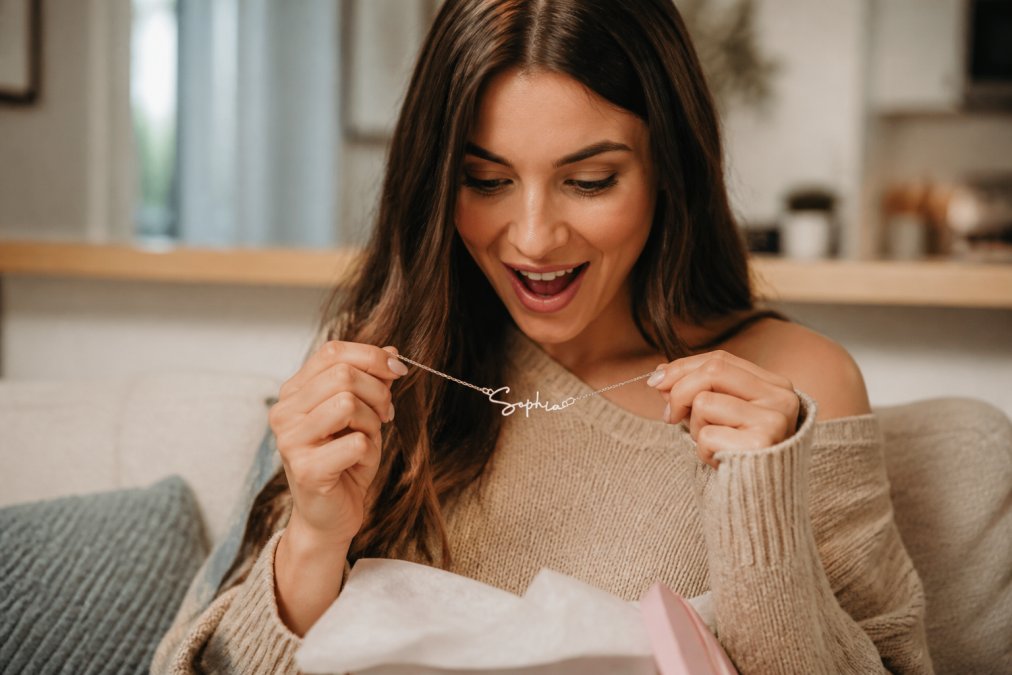
Personalization triggers what researchers call the "endowment effect", people assign greater value to items they perceive as uniquely theirs. A necklace with a name engraved on it becomes more than jewelry. It becomes a statement that says, "I know you. I thought about you specifically when choosing this."
The Effort Heuristic in Gift-Giving
The effort heuristic is how people judge value based on the perceived work involved in creating something. When a gift requires customization, the recipient assumes the giver invested time, thought, and intention. This mental shortcut shapes how they perceive the gift's worth.
Consider the difference between buying a generic bracelet off a shelf and ordering one with coordinates of a meaningful location engraved on it. Both might cost similar amounts, but the second signals something crucial: you cared enough to think beyond the product itself. A personalized gift from Tender Keeps, like the Signature Style Name Necklace ($39.95), leverages this perfectly. The customization itself communicates effort, even though ordering takes minutes.

Emotional Resonance and Personal Identity
Personalization works because it speaks directly to someone's sense of self. A gift customized with your name or initials becomes a reflection of your identity. When personalization connects to something meaningful in the relationship, an inside joke, a shared date, or a nickname only the two of you use, it creates what psychologists call "intimate distance." That privacy amplifies the emotional impact.
Personal identity is central to how humans form bonds. When a gift acknowledges who you are, your tastes, your story, and your place in someone's life, it affirms your existence in their world. That affirmation feels good. It feels seen.
How Customization Changes Perceived Value
Customization fundamentally shifts how the brain calculates value through several overlapping cognitive biases.
The Endowment Effect and Ownership
The endowment effect, the tendency to assign greater value to items we own or perceive as uniquely ours, is the primary driver of perceived value in personalized gifts. When a gift is customized with a recipient's name or a detail specific to them, their brain immediately categorizes it as "mine" rather than "a generic item someone bought." Research in behavioral economics shows this shift increases the item's value in their mind by 25-50% compared to an identical non-personalized version.
Uniqueness Bias and Scarcity Perception
Personalization leverages uniqueness bias, the cognitive tendency to place higher value on items perceived as rare or one-of-a-kind. Even though many people might order the same personalized necklace design, the customization makes each version feel unique to its recipient. The brain doesn't distinguish between "actually one-of-a-kind" and "customized for me specifically." Both trigger the same valuation response.
Narrative Value and Irreplaceability
Customization creates narrative value that generic items cannot match. A standard item has a price. A customized item has a story: why this person chose this specific personalization, what it means about your relationship, what moment or memory it references. When a gift carries narrative weight, coordinates of where you met, a date that marks a milestone, an inside joke rendered in engraving, the recipient's brain stores it differently. That narrative layer means the gift cannot be easily replaced without losing the specific meaning.
Practical Implication: Value Perception Exceeds Price
The combination of these cognitive biases means personalized gifts consistently generate perceived value that exceeds their actual price. A $40 personalized necklace might be perceived as worth $60-80 in emotional terms. That gap between actual cost and perceived value is what makes personalization so effective as a gifting strategy.
The Neuroscience of Anticipation and Memory
Personalization triggers distinct neurological responses in both the giver and recipient, creating measurable differences in anticipation, pleasure, and long-term memory encoding.
Dopamine Release in the Giver: The Anticipation Loop
When you order a personalized gift, your brain enters an anticipation state that activates the dopamine reward system. As you select personalization details, choosing the exact wording, deciding on font style, imagining how the recipient will react, your brain constructs a mental simulation of the future moment. That simulation activates the same neural circuits that would activate if you were actually experiencing the moment. Your brain releases dopamine repeatedly throughout the anticipation period, making the entire gifting experience more rewarding for the giver.
Memory Encoding: Why Personalized Gifts Stick
Personalization creates stronger, more durable memories through distinctive encoding. The brain encodes memories more strongly when information is unique, emotionally significant, or tied to personal identity. Personalized gifts hit all three criteria simultaneously.
When you receive a personalized gift, your brain encodes multiple layers: the object itself, the giver, the occasion, the specific personalization detail, what that detail means about your relationship, and the emotional reaction in the moment. This multi-layered encoding creates "elaborated memories", memories with more neural connections and more retrieval pathways. That distributed storage makes the memory more durable and more easily retrievable.
Repetition and Reconsolidation: The Long-Term Effect
Every time the recipient sees, wears, or thinks about the personalized gift, they're reactivating and reconsolidating the memory. A personalized necklace worn regularly is retrieved from memory dozens of times per month. Each retrieval reactivates the neural pathways associated with that gift, strengthening the memory and the emotional connection to the giver. This is why personalized gifts that are actually used or displayed create lasting emotional impact.
Neural Signature of Personalization
Functional MRI studies show that personalized gifts activate distinct neural patterns compared to generic gifts. Personalized gifts activate not just reward centers but also regions associated with self-referential processing and social bonding. Generic gifts activate reward centers but show less activation in self-referential and social bonding regions. This neural distinction explains why personalized gifts feel more special at a biological level.
Benefits of Personalized Gifts for Relationships
Personalized gifts strengthen relationships by communicating that you pay attention, that you value the person enough to customize something for them, and that you want to create a lasting memory together. These communications matter. Relationships thrive on evidence that you're seen and valued.
Personalized gifts become conversation starters. They get displayed, worn, or kept in visible places. Every time someone sees the gift, they're reminded of the giver and the relationship. That repeated reinforcement strengthens the bond in ways generic gifts cannot match.
When someone receives a thoughtful, personalized gift, they're more likely to invest in the relationship themselves. It creates a cycle of intentionality. Relationships that exchange personalized gifts tend to deepen faster than those built on generic exchanges.
How to Choose a Meaningful Personalized Gift
Selecting the right personalized gift requires thinking beyond aesthetics. The best personalized gifts connect to something true about the recipient or your relationship.
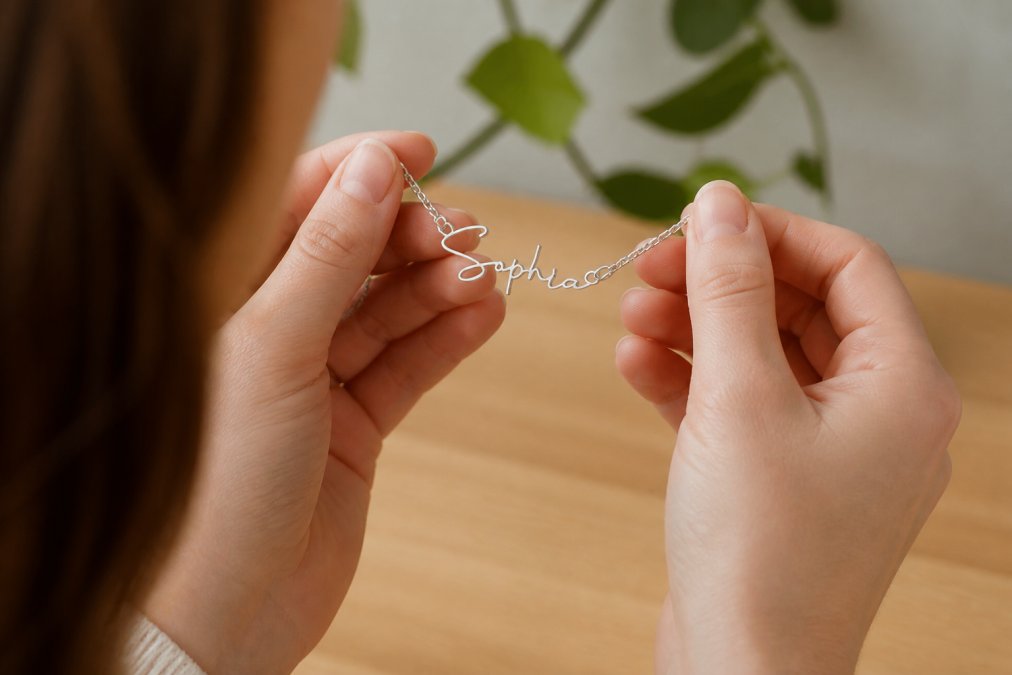
Start by asking: What would this person display or wear regularly? A personalized item only deepens your relationship if the recipient actually uses or displays it. Next, consider what detail to personalize. Names work universally, but a date, location, initials, or inside reference might feel more personal. A necklace engraved with coordinates of where you met carries more narrative weight than one with just a first name.
Think about the recipient's style and taste. A personalized gift should feel like something they would have chosen for themselves, not something that reflects your taste imposed on them.
Selecting Best Personalized Gifts Under $50
The best personalized gifts under $50 prove that meaningful customization doesn't require a large budget. Quality materials and thoughtful design matter more than price.
Tender Keeps offers several options in this range that deliver genuine emotional impact. The Signature Style Name Necklace at $39.95 provides elegant personalization without breaking the budget. When shopping in this price range, prioritize items that will be used or displayed. Jewelry, home goods, and accessories tend to offer better perceived value than consumables because they last.

Look for products that balance personalization with quality. A $40 necklace with solid materials and clean customization communicates that you invested thoughtfully. Consider adding gift wrapping to enhance the unboxing experience. Tender Keeps offers Gift Wrap with Personalized Message for $7.95, which transforms the presentation and reinforces the thoughtfulness of the gift.
Personalization Across Cultures and Life Milestones
Personalization carries different weight across cultures. In some traditions, personalized gifts signal deep intimacy and are reserved for close relationships. In others, personalization is a standard expectation across all gift-giving contexts.
Life milestones create natural moments for personalized gifts. Weddings, births, significant birthdays, and anniversaries all mark transitions that personalization can honor. A personalized gift for a 50th birthday carries different weight than one for a 30th. The context shapes what personalization should emphasize.
| Milestone | Best Personalization Approach | Emotional Impact |
|---|---|---|
| Wedding/Anniversary | Names, date, or shared reference | Celebrates union and shared history |
| Birth/New Baby | Baby's name or birth date | Marks arrival and creates keepsake |
| Significant Birthday | Age, year, or personal milestone | Acknowledges life transition |
| Retirement | Achievement or shared memory | Honors career and relationship |
| Mother's/Father's Day | Appreciation message or family reference | Affirms role and relationship |
Personalized gifts work because they operate on multiple psychological levels simultaneously. They communicate effort, acknowledge identity, create anticipation, encode stronger memories, and strengthen relationships. Why personalized gifts feel more special isn't mysterious. It's how human brains are wired to respond to evidence that someone sees us, values us, and invested intention in our happiness.
When you're ready to give a gift that feels genuinely special, Tender Keeps makes it simple. With options like the Classic Style Name Necklace and thoughtful customization choices, you can create something that doesn't just mark an occasion, it creates a moment your recipient will return to again and again. Free shipping on orders over $70 means you can add that personalized gift wrap to make the entire experience memorable. Shop Now and give something as extraordinary as the person receiving it.

Frequently Asked Questions
Why do personalized gifts create stronger emotional bonds than generic gifts?
Personalized gifts signal that you invested time understanding the recipient's identity, preferences, and values. This effort triggers what psychologists call the effort heuristic, people perceive gifts requiring more thought as more meaningful. The customization makes the recipient feel truly seen and valued, deepening emotional connection and creating a lasting memory tied to your relationship rather than just the object itself.
What are the benefits of personalized gifts compared to standard store-bought items?
Personalized gifts offer several key advantages: they boost recipient self-esteem by celebrating their individuality, increase perceived value even at lower price points, create stronger emotional resonance, and become cherished keepsakes rather than forgotten items. They also demonstrate thoughtfulness and emotional intelligence, strengthening social bonding. A personalized necklace under $50 can feel more valuable than a generic $100 item because it reflects genuine care and attention to the recipient's unique identity.
How do I choose a meaningful personalized gift that won't feel generic or impersonal?
Focus on gifts that reflect something specific about the recipient's identity, values, or your shared history together. Consider their lifestyle, hobbies, and personal style rather than just their name. Pair the personalization with quality materials and craftsmanship, a well-made personalized necklace or keepsake feels more thoughtful than a cheaply made item. Include a handwritten note explaining why you chose it. This combination of intentional selection, quality execution, and personal context ensures the gift feels uniquely tailored to them.
Are personalized gifts worth the extra cost compared to regular gifts?
Yes, when chosen thoughtfully. Personalized gifts offer lasting value because they become meaningful keepsakes recipients treasure for years, unlike generic items often forgotten or discarded. The perceived value, how special the recipient feels, often exceeds the actual price. Many quality personalized gifts, like the Signature Style Name Necklace at $39.95, cost less than generic alternatives while creating far greater emotional impact and memory retention, making them a smart investment in meaningful relationships.
This article was written using GrandRanker


